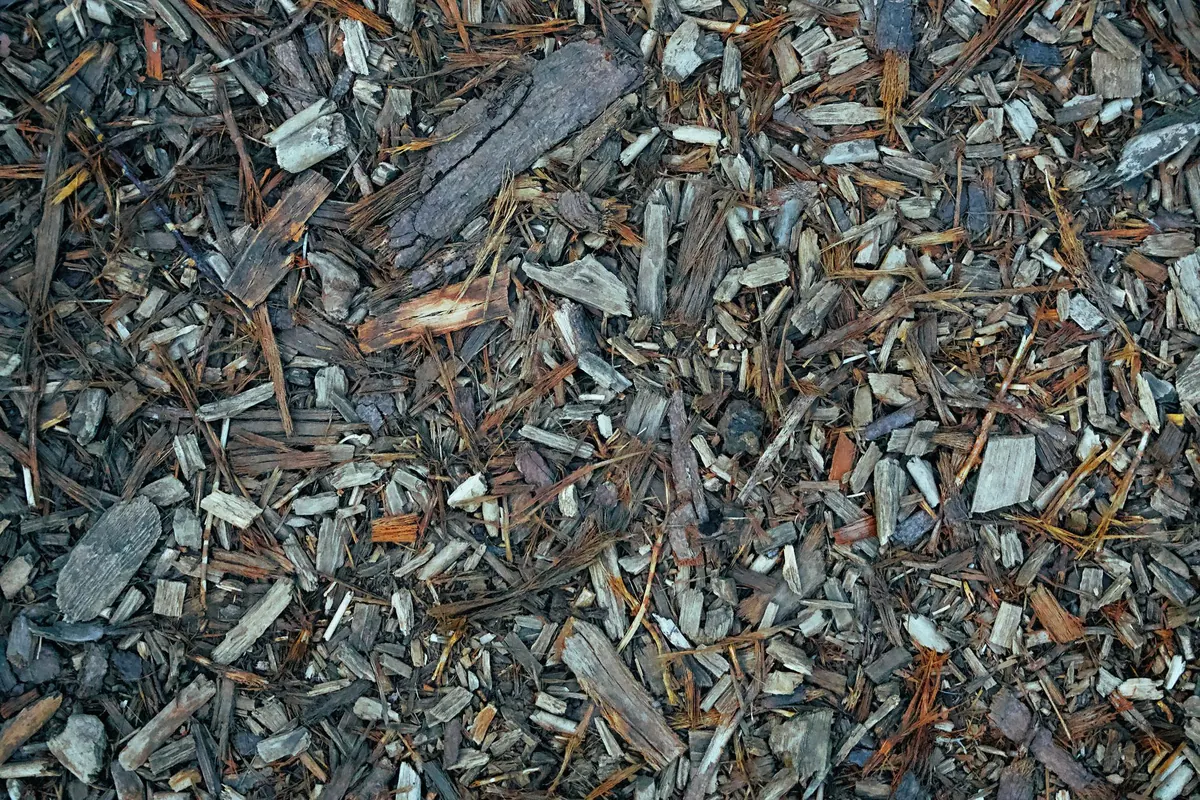
A street tree makes its living in a place designed for cars. The soil is compacted, the space is cramped, summer heat radiates off the asphalt, and winter brings salt and snow piled against the trunk. Mulching is the cheapest, most useful thing anyone can do for that tree. It is also one of the easiest ways to hurt it. The distance between a mulch ring that helps and a mound that slowly kills is a few centimetres and one bad habit. Both take about five minutes to learn.
On a forest floor, leaves and twigs fall and rot where they land, and the soil underneath stays cool, moist and full of life. A mulch ring copies that arrangement. A layer of coarse organic material slows evaporation from the soil surface, which matters enormously when a tree is surrounded by paving that sheds every drop of rain. It buffers the soil against temperature swings, keeping roots cooler in July and less prone to repeated freezing and thawing in winter.
It also does quieter work. As mulch breaks down, it feeds the worms, fungi and bacteria that rebuild soil structure, and better structure means water actually infiltrates instead of running off into the gutter. Mulch suppresses grass and weeds that would otherwise compete for the same thin slice of water. And it puts a soft, visible buffer between the trunk and the two things that damage street trees most often: mower decks and string trimmers. A wound at the base of a young tree is an open door for decay that shows up a decade later.
One honest caveat: mulch is not fertiliser. It feeds the soil, and the soil feeds the tree, slowly. Do not expect a thin layer of chips to fix a tree that is starved, thirsty or planted too deep.
Aim for five to ten centimetres of settled mulch, spread evenly. That is roughly two to four inches, and it is less than most people instinctively pile on. Within that range, adjust to the material and the soil. Fine, soft mulch such as compost or leaf mould mats down and holds water, so keep it nearer five centimetres. Coarse arborist chips, which let air through, can go to the top of the range. Heavy clay soils that drain slowly deserve the thinner end of the scale.
Newly planted trees need care here too: a shallow layer over the root ball, kept well clear of the trunk, is plenty. More than that can keep the root ball too wet and slow the establishment you are trying to encourage.
Do not judge depth by eye. Push a finger, a stick or the handle of a trowel into the mulch until you reach soil. If you are already at eight centimetres, your work is done for the year. This single habit prevents most of the trouble described below.
Spread mulch as wide as the site allows. Out to the edge of the canopy is ideal; on a tight street, at least fill the tree pit and push the ring outward wherever there is bare ground to claim. Width is where the moisture benefit comes from, so a wide, thin ring beats a narrow, deep one every time.
Then stop short of the trunk. Leave a gap of a few centimetres, or simply pull the mulch back until you can see the point where the trunk widens into roots. That flare is the tree's transition zone, and it needs air. On grafted trees, keep the graft union above the mulch line as well.
Taper the outer edge down to soil level so the material does not spill onto the pavement, block a drain or get scraped up by a plough. Keep the surface level or very slightly dished. A tree pit is not a flower bed, and it is certainly not a hill.
Simple is best, and cheap is usually fine.
Spring and autumn are both good times to spread. Water the soil underneath first if it is dry, then lay the mulch; it should go onto moist ground, not be used as a substitute for watering. Check the ring once a year, in early spring, and top up only where the layer has fallen below five centimetres. Pull weeds before they seed rather than after. Keep an eye on the ring after street works, delivery vans and winter ploughs, all of which scatter chips onto pavements and into drains.
If you find a volcano someone else built, assume good intentions. A neighbour or a well-meaning crew thought they were helping, and a polite explanation with a photo of a properly exposed root flare usually settles it.
Done this way, mulching is one of the few jobs in urban forestry that almost anyone can do well, with a fork, a barrow and half an hour.
Photo: Mike Bird / Pexels

A practical troubleshooting guide to the most common urban tree watering errors during heat waves — frequency,...

Columnar cypress can screen a narrow driveway without turning it into a tunnel. Here is how to choose, lay out, and...

A practical guide to growing dwarf cypress in pots on a balcony, from choosing the right variety and container to...

Italian city trees and green spaces.
